
Most-Asked Test Signs
The signs Irish testers actually ask about most, ordered by how often test-takers report them in r/Irishdrivingtest pass reports. Master these first.

Clearway
Stopping and parking are prohibited on the road during the hours shown on the accompanying plate.

Pedestrianised street
The street is a pedestrian zone and vehicles may not enter except during the times shown on the plate.

Hospital
The sign marks the location or entrance of a hospital.

Level crossing with gates or barriers
Warns of a level crossing ahead that is controlled by warning lights and barriers.

No overtaking
Overtaking is prohibited on this stretch of road.

300m to next exit
Countdown marker: 300 metres to the next exit.

End of motorway
Motorway regulations end here.

Crossroads
Warns that a crossroads is ahead, with side roads joining from both the left and the right.

T-junction
Warns that the road you are on ends ahead at a T-junction, where you must turn left or right.

Y-junction
Warns that the road ahead splits into two roads forking left and right in a Y shape.

Staggered crossroads
Warns of a staggered crossroads ahead, where side roads join from the left and the right at points slightly apart rather than directly opposite.

Crossroads on a dual carriageway
Warns of a crossroads ahead where your road crosses a dual carriageway, with a central median between the two carriageways.

No entry to vehicles
No vehicles may enter the road beyond this sign; it is often used at the exit end of a one-way street.

Max speed limit 50 km/h
The maximum speed allowed from this point is 50 km/h, the usual limit in built-up areas such as towns and villages.

Max speed limit 80 km/h
The maximum speed allowed from this point is 80 km/h, a limit typical of regional roads.

Max speed limit 120 km/h
The maximum speed allowed is 120 km/h, the limit that applies on motorways.

No left turn
You are not allowed to turn left at the junction ahead.

No right turn
You are not allowed to turn right at the junction ahead.

No U-turn
You must not make a U-turn on this road.
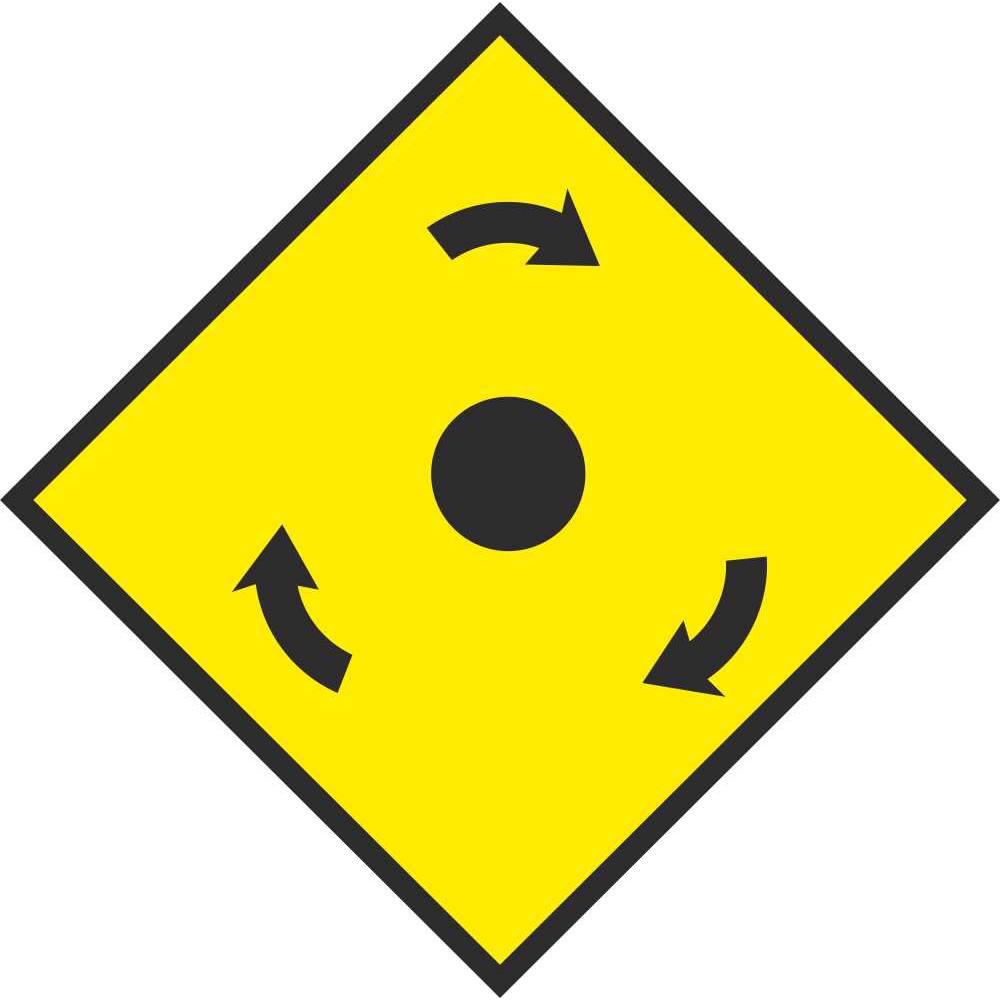
Mini-roundabout ahead
Warns of a mini-roundabout ahead, where the central island is small and may be only painted on the road.

Cul-de-sac
The road ahead is a dead end with no through route.

Loop road ahead
Warns that the road ahead loops round on itself, turning back in a tight circular curve.

Yield
You must give way to traffic on the major road ahead and only proceed when it is safe.

School ahead
Warns of a school ahead, where children may be on the footpath or crossing the road.

Children crossing
Warns that children may run onto the road in a residential area, for example near homes or play areas.

Road narrows on both sides
Warns that the road ahead becomes narrower from both sides.
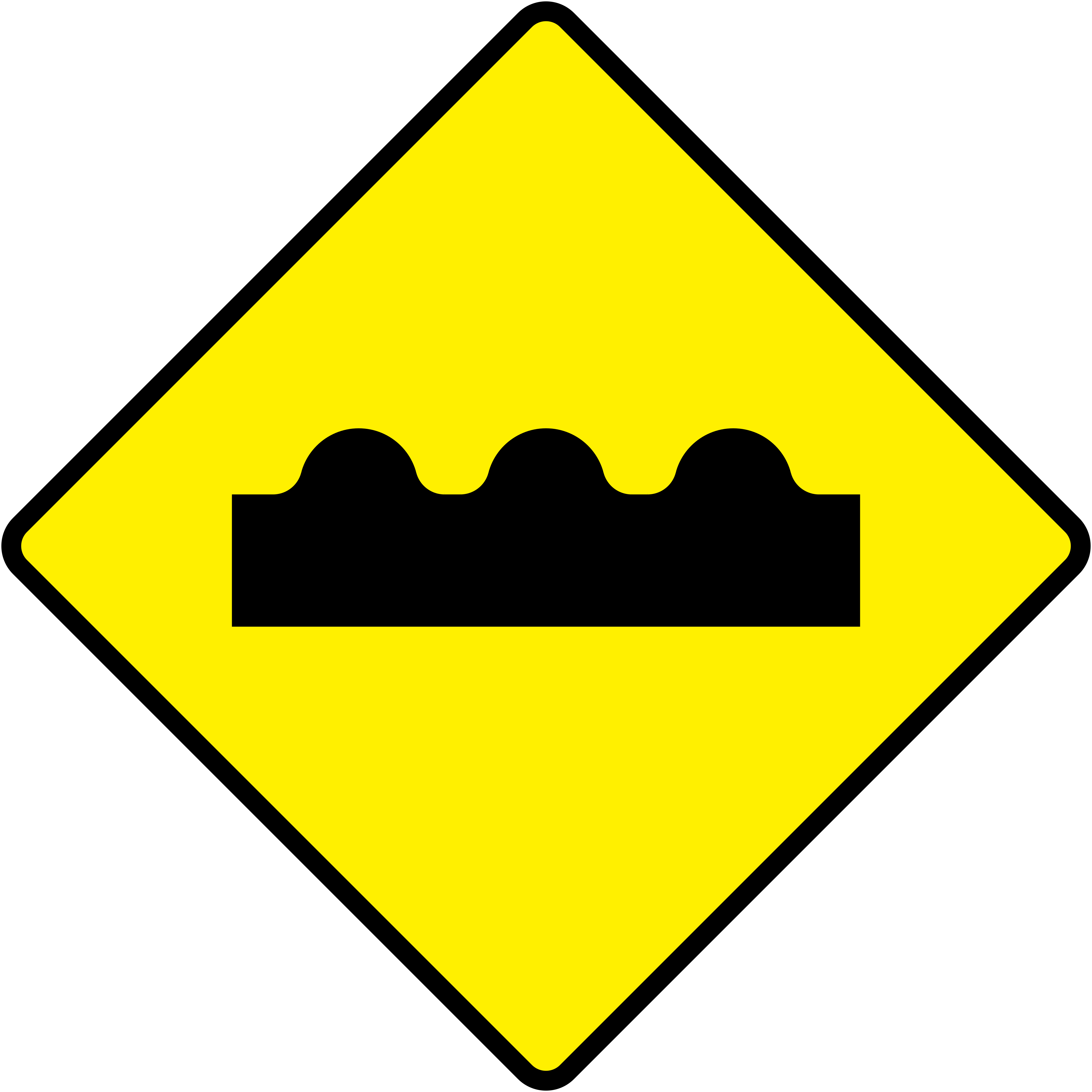
Uneven road
Warns that the road surface ahead is uneven, with bumps or rough patches.

Unprotected water (quay, canal or river)
Warns that the road ahead runs to the edge of a quay, canal or river with no barrier to stop vehicles going into the water.

Stop
You must come to a complete stop at the stop line before entering the junction, even if the road looks clear.

Sharp change of direction – multiple chevrons (left)
Marks a sharp change of direction to the left at a bend or junction.

Falling rocks
Warns that rocks may fall onto or be lying on the road ahead from a cliff or rock face.

Contra-flow bus lane
There is a bus lane in which buses travel in the opposite direction to the other traffic.

Crosswind
Warns that strong crosswinds may hit vehicles on the road ahead, often on exposed stretches or bridges.